
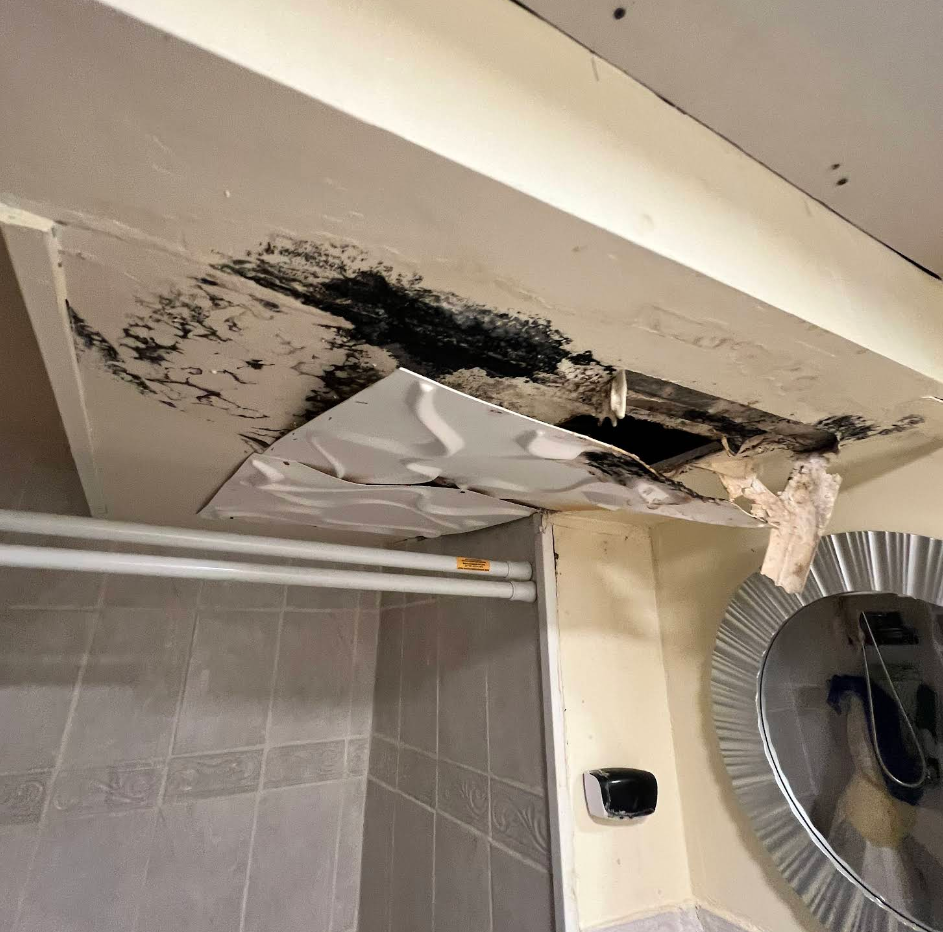
A musty smell can be frustrating because you know something is off, but there may be no obvious mold, leak, or water stain to explain it.
The smell alone does not prove that mold is growing in your home. However, a persistent musty odor is a good reason to start looking for moisture, damp building materials, or evidence of an older water problem that may not be visible from the room.
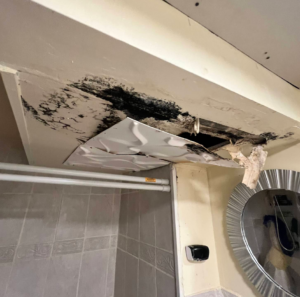
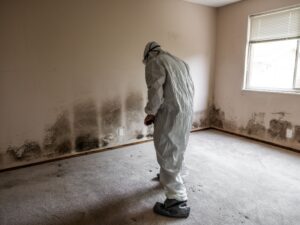
The U.S. Environmental Protection Agency notes that hidden mold may be suspected when a building smells moldy but the source cannot be seen. Mold can develop behind drywall, beneath carpeting, above ceiling tiles, around leaking pipes, and in other concealed areas when enough moisture is present.
For Long Island homeowners, the best first step is usually not guessing where mold might be. It is figuring out where moisture may be coming from and what parts of the property may have been affected.
Key Takeaways
- A musty smell does not automatically confirm mold, but it should not be ignored if it persists.
- Start by looking for moisture, previous leaks, water staining, condensation, and damp materials.
- Hidden moisture can exist behind walls, under flooring, above ceilings, and around plumbing.
- A room can look dry even when materials behind the visible surface are still damp.
- Mold testing is not automatically the first step in every situation.
- If the source of the odor or moisture cannot be found, a professional mold or moisture assessment can help determine what should be investigated next.
A Musty Smell Is a Reason to Look for Moisture First
Mold needs moisture to grow, which is why tracking down the source of dampness is often more useful than simply searching the room for a visible patch of mold.
Start with the basic question:
What could have gotten wet?
Think about what has happened in or around the room recently. A roof leak, plumbing problem, overflowing appliance, basement water intrusion, condensation issue, or older water-damage event can leave moisture in materials even after the visible surface appears dry.
The EPA recommends investigating areas where moisture is a concern and specifically identifies moldy or musty odors as something that can indicate a water or mold problem requiring a closer look.
If you can identify the moisture source early, you have a much better starting point for deciding what needs to happen next.
Where Can a Musty Smell Come From If You Cannot See Mold?
The source is not always on the surface you are looking at. Building materials can hide moisture and mold growth from normal view.
Here are some of the first areas worth checking.
Behind Drywall After a Leak
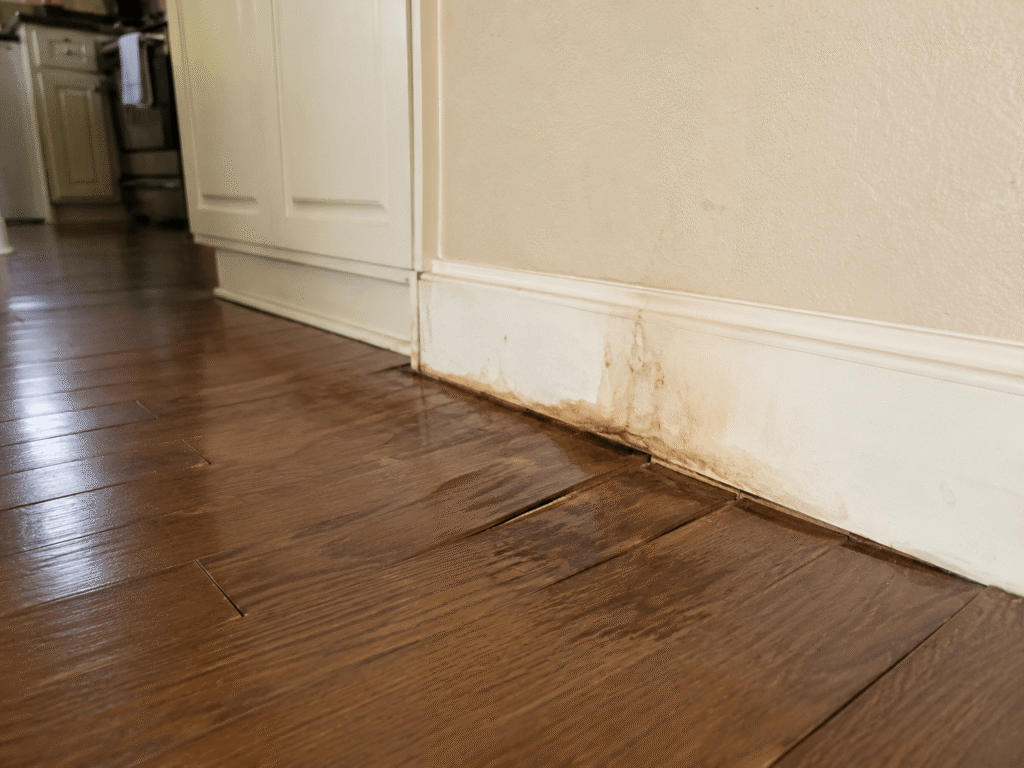
A wall can look normal from the room while the cavity behind it has been affected by water.
Consider what is on the other side of the wall. Bathrooms, kitchens, laundry areas, plumbing lines, exterior walls, and roof drainage problems can all provide clues.
Look for subtle changes such as:
- Water staining
- Bubbling or peeling paint
- Swollen or softened drywall
- Discolored trim
- Baseboards pulling away from the wall
- A smell that becomes stronger near one particular section
Do not start cutting into a wall simply because it smells musty. The EPA warns that disturbing an area containing hidden mold can release spores and other particles into the surrounding space.
Under Flooring and Around Baseboards
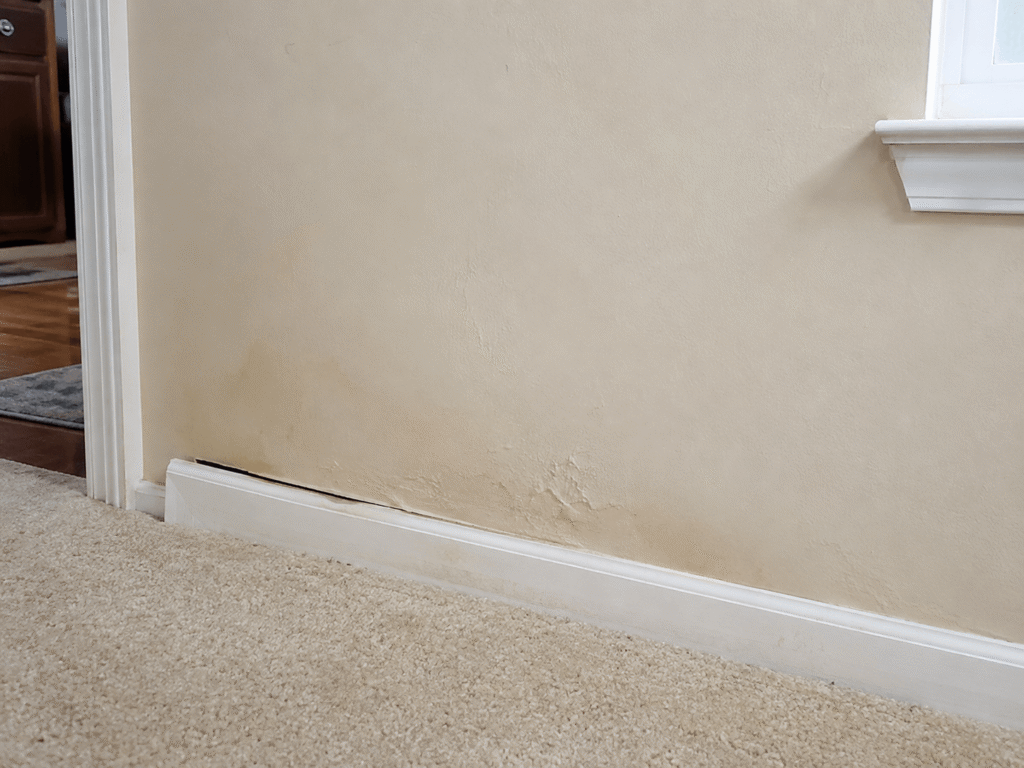
Water does not always remain where a leak first occurred.
A dishwasher leak, overflowing fixture, leaking pipe, basement water event, or other source can allow moisture to move beneath flooring or into materials along the bottom of a wall.
Pay attention to flooring that has started to:
- Warp
- Buckle
- Separate
- Feel unusually soft
- Develop staining near walls
Carpet can be particularly deceptive because the visible surface may feel dry while padding or materials underneath were affected.
Basements and Finished Lower Levels
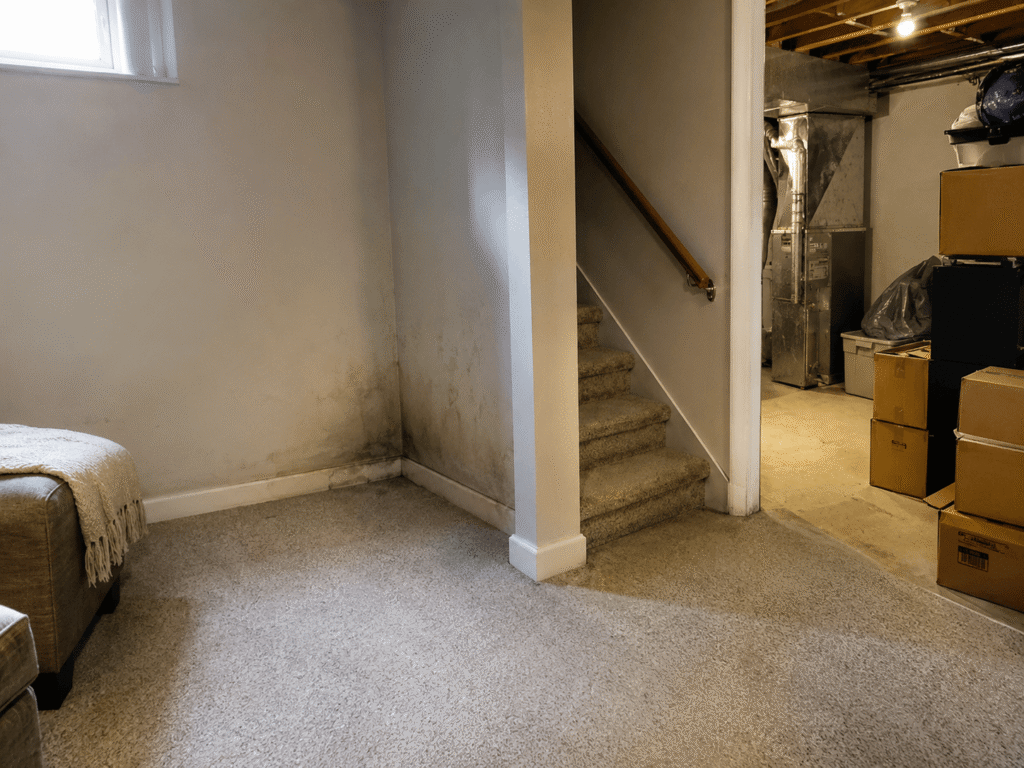
If the smell is strongest in the basement, do more than inspect the center of the room.
Check around:
- Foundation walls
- Finished wall systems
- Utility areas
- Plumbing penetrations
- Windows
- Stored cardboard or porous materials
- Carpet edges
- Baseboards
- Areas where water has entered before
A finished basement may conceal part of the foundation or wall cavity, making moisture problems less obvious than they would be in an unfinished space.
A recurring basement odor is especially worth investigating if it changes after rain, after the HVAC system runs, or during periods when the room has been closed for a while.
Bathrooms, Kitchens and Cabinets
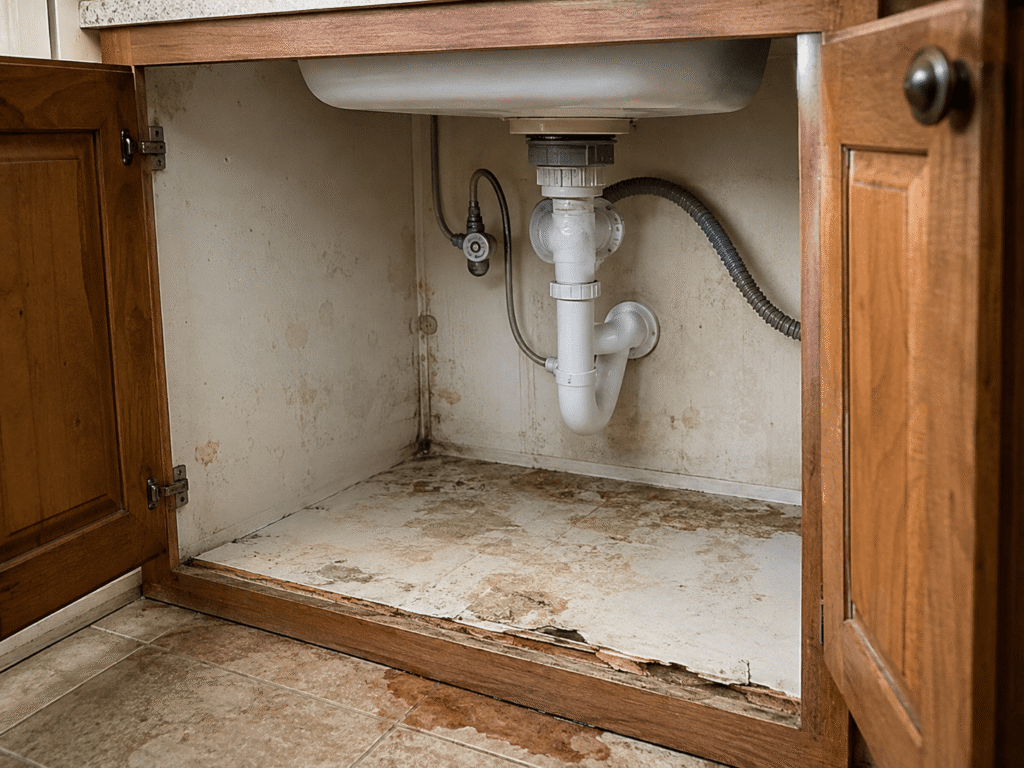
Plumbing leaks can remain hidden for quite some time.
Look underneath sinks and around toilets, tubs, showers, refrigerators, dishwashers, and other fixtures connected to water.
Inside cabinets, watch for:
- Swollen material
- Staining
- Loose finishes
- Dampness
- Odors concentrated near plumbing
A small, slow leak can sometimes create a moisture problem without leaving a dramatic puddle on the floor.
Attics and Ceiling Areas
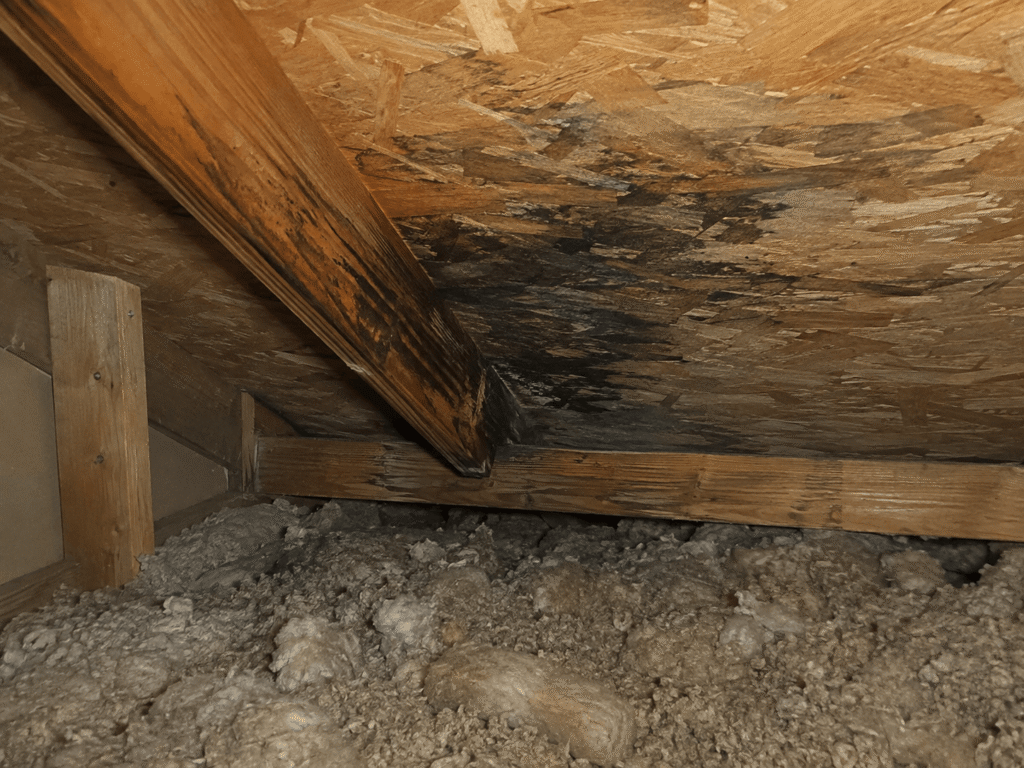
If the odor is stronger upstairs or near a particular ceiling, consider what is happening above it.
Roof leaks, plumbing lines, condensation, and other moisture sources can affect roof materials, insulation, framing, and ceiling assemblies.
The EPA specifically lists roof materials above ceilings among the places where hidden mold may occur when moisture problems are present.
Think About What Changed Before the Smell Started
One of the most useful clues is often the property’s recent history.
Try to remember when you first noticed the odor.
Did any of these happen beforehand?
- A plumbing leak
- Heavy rain or roof leakage
- Water entering the basement
- An overflowing sink, tub, washing machine, or dishwasher
- HVAC repairs
- A room being closed for an extended period
- New flooring or wall finishes
- Construction or renovation
- A previous water-damage cleanup
Even a water problem that seemed minor at the time may help narrow down where to investigate.
If the odor started soon after one specific event, begin there instead of randomly checking the entire house.
Does a Musty Smell Mean You Need Mold Testing?
Not necessarily.
This is where homeowners sometimes jump ahead.
A musty odor may justify a mold or moisture assessment, but that does not mean laboratory sampling is automatically required.
The first question is often whether there is a moisture problem, visible evidence of mold, or a concealed area that requires further evaluation.
Sampling can provide useful information in certain situations, but it should have a clear purpose rather than being treated as the answer to every musty odor.
All Island Mold Inspectors provides licensed mold assessments along with air and surface sampling, moisture evaluation, remediation protocols, and post-remediation verification when those services are appropriate for the project.
If you are unsure about the difference between the services, see our guide to Mold Inspection vs. Mold Testing in New York: Which One Do You Actually Need?
A Persistent Musty Smell Is a Clue, Not a Diagnosis
If your Long Island home smells musty but you cannot see mold, do not assume the worst—and do not ignore the odor either.
Start with moisture.
Look at previous leaks, plumbing, flooring, walls, ceilings, basements, and other areas that may have been exposed to water. Pay attention to when the odor appears and where it is strongest.
If the source remains unclear, an independent moisture investigation or licensed mold assessment can help determine what is happening before you start opening walls, replacing materials, or paying for cleanup that may not address the real problem.
All Island Mold Inspectors provides mold testing and licensed mold assessments on Long Island, as well as environmental investigations for hidden moisture and unexplained property conditions.