
A standard home inspection can identify many visible problems, but it may not always include a full mold assessment.
If the property has a history of water damage, musty odors, visible growth, basement moisture, or suspicious staining, a separate mold inspection may be worth considering before you close.
In New York, a home inspector must also hold a mold assessor license if they are providing a mold assessment as part of the inspection.
When a Separate Mold Inspection May Make Sense

A dedicated mold inspection is most useful when there is a specific reason to investigate further.
Consider one if you notice:
- Musty or damp odors
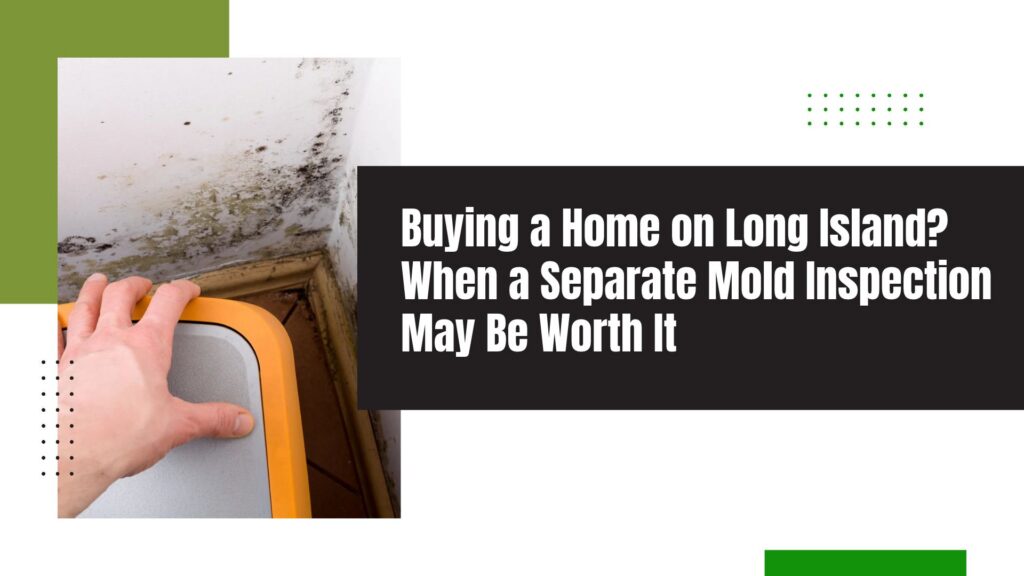
- Visible mold-like growth
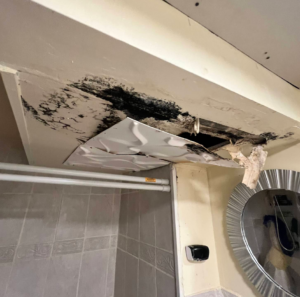
- Water stains on ceilings or walls
- A history of basement flooding
- Roof or plumbing leaks
- Damp finished basements
- Moisture around windows
- Fresh repairs in areas that previously had water damage
- Signs of recurring condensation
- Previous mold remediation
A Home Inspection and a Mold Assessment Are Not the Same Thing

A general home inspection looks broadly at the property’s major systems and visible conditions.
A mold assessment is more focused.
New York defines a mold assessment as an inspection designed to identify mold, conditions that facilitate mold, or conditions likely to facilitate mold.
That can include closer evaluation of:
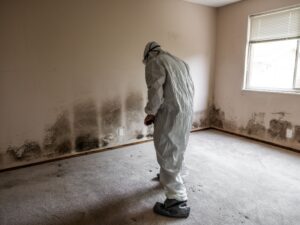
- Visible mold
- Moisture conditions
- Previous water damage
- Areas where hidden mold may be suspected
- Whether sampling is actually useful
Watch Closely for Past Water Damage
Water history matters because mold growth depends on moisture.
EPA guidance emphasizes that moisture control is the key to preventing mold, and mold can return if the water source is not corrected.
During a home purchase, pay attention to:
- Ceiling stains
- Water marks in basements
- Soft or damaged drywall
- Warped flooring
- Discolored trim
- Recently replaced sections of wall
- Damp insulation
- Signs of roof leaks
Musty Odors Without Visible Mold Are Worth Investigating
You may walk through a home and smell something musty without seeing obvious mold.
That is one situation where a separate inspection may be useful.
EPA notes that hidden mold can exist behind drywall, wallpaper, paneling, carpets, ceiling materials, around leaking pipes, and in roof assemblies.
A musty smell does not prove there is hidden mold, but it gives you a reason to investigate further before assuming the property is clear.
Finished Basements Deserve Extra Attention
Finished basements can hide moisture better than unfinished spaces.
Drywall, flooring, insulation, and trim can cover areas affected by:
- Foundation seepage
- Plumbing leaks
- Previous flooding
- Condensation
- Drainage problems
If the basement looks recently renovated but there are still odors, stains, or damp areas, ask about the history of the space.
A targeted mold and moisture inspection can help determine whether the concern goes beyond what is visible.
What About Homes That Were Previously Remediated?
Previous mold remediation is not automatically a reason to walk away from a property.
The more important questions are:
- What caused the original problem?
- Was the moisture source corrected?
- What areas were affected?
- What work was completed?
- Is there documentation?
- Are there signs that the problem returned?
EPA guidance states that a remediation project should not be considered complete until the water or moisture problem has been fixed and visible mold and moldy odors are no longer present.
If documentation is incomplete or the same area still shows signs of moisture, a separate assessment may provide useful information.
The Bottom Line
A separate mold inspection is most valuable when there is a specific reason to investigate moisture, visible growth, previous water damage, or unexplained odors.
It should not be treated as an automatic requirement for every Long Island home purchase.
But when warning signs are present, having the property evaluated by a properly licensed mold assessor before closing can give you better information about what you are buying and whether further investigation or corrective work may be needed.