

If you find mold in your New York home, hiring one company to inspect the problem, decide what needs to be removed, perform the cleanup, and then declare its own work successful might sound convenient.
For professional mold projects covered by New York law, that separation matters.
Under Article 32 of the New York Labor Law, the same licensee cannot perform both mold assessment and mold remediation on the same property. The law also prohibits a person from owning an interest in both the assessment licensee and the remediation licensee working on that same property.
The basic process is designed so that one qualified party evaluates the problem and defines the scope of work, while a separate remediation contractor performs the cleanup.
For Long Island property owners, understanding those roles before hiring anyone can help prevent confusion about who writes the remediation plan, who performs the work, and who determines whether the project passes clearance.
Key Takeaways
- New York separates professional mold assessment from mold remediation on the same project.
- A licensed mold assessor evaluates the property and prepares the mold remediation plan.
- A separate licensed mold remediation contractor prepares a work plan and performs the cleanup.
- New York law also restricts common ownership between the assessment and remediation licensees working on the same property.
- After remediation, a mold assessor performs the post-remediation assessment and determines whether the project meets its clearance criteria.
- The same assessor who prepared the remediation plan may return for the final assessment.
- Property owners should verify licenses and understand each contractor’s role before remediation begins.
The Short Answer: Mold Assessment and Remediation Are Separate Roles in New York
For a professional mold project covered by Article 32, the company evaluating the mold problem should be independent from the contractor performing the remediation.
New York Labor Law Section 936 states that no licensee may perform both mold assessment and mold remediation on the same property. It also states that no person may own an interest in both the assessment licensee and remediation licensee working on that property.
That means this is more than simply having two different employees perform different tasks under the same operation.
The law is intended to preserve independence between the party deciding what work needs to be done and the party being hired to perform that work.
The New York State Department of Labor describes this separation as a consumer-protection measure and requires an independent mold assessment to establish the scope of professional remediation work.
What Does Article 32 Cover?
Article 32 establishes New York’s licensing requirements and minimum work standards for mold assessment, remediation, and abatement professionals.
The state’s Mold Program includes requirements involving:
- Training and licensing
- Independent mold assessment
- Mold remediation planning
- Remediation work plans
- Minimum work practices
- Separation between assessment and remediation
- Post-remediation assessment and clearance
New York’s Department of Labor is responsible for enforcing these requirements.
A key point for homeowners is that assessment and remediation are different professional services.
Hiring someone to assess the problem does not mean you have hired that same party to remove the mold.
What Does the Mold Assessor Do?

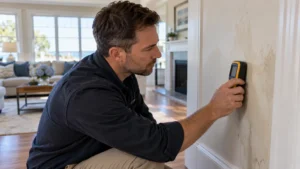
Think of the mold assessor as the person responsible for evaluating the condition of the property and defining what the remediation project needs to accomplish.
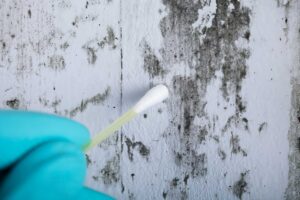
Depending on the situation, a professional mold assessment can involve examining:
- Visible mold or suspected contamination
- Water staining
- Active or previous leaks
- Damp building materials
- Moisture conditions
- Areas where mold may extend beyond what is immediately visible
- The likely source of water or moisture
- Areas and materials that may require remediation
What Does the Mold Remediation Contractor Do?
The remediation contractor has a different job.
Once the assessor has prepared the Mold Remediation Plan, the property owner provides that plan to the remediation contractor.
The remediation contractor then prepares a Mold Remediation Work Plan explaining how the company will carry out the required cleanup.
According to NYSDOL guidance, the contractor’s responsibilities can include:
- Preparing the remediation work plan
- Providing that work plan before cleanup begins
- Establishing necessary containment
- Performing removal and cleaning
- Sanitizing or disinfecting where called for
- Supervising mold abatement workers
- Following the requirements established in the assessor’s remediation plan
The remediation contractor’s work plan must fulfill the requirements of the assessor’s remediation plan.
This creates a clear division:
Assessor: defines what needs to be addressed.
Remediation contractor: determines how the required cleanup will be performed and carries it out.
Mold Remediation Plan vs. Work Plan: Why Are There Two?
These documents sound similar, but they serve different purposes.
Document | Prepared By | Main Purpose |
Mold Remediation Plan | Licensed Mold Assessor | Defines the scope and requirements of the remediation |
Mold Remediation Work Plan | Licensed Mold Remediation Contractor | Explains how the contractor will carry out the required work |
The remediation plan comes first.
The work plan must then follow the requirements established by that assessment.
This distinction is important when comparing remediation bids. A contractor should be pricing work based on the independent remediation scope rather than deciding the assessment and selling the cleanup at the same time.
NYSDOL’s FAQ states that a licensed remediation contractor cannot proceed with a mold project without an assessment simply because a property owner wants to waive that step.
Does Article 32 Apply to Every Small Spot of Mold?
Not every household mold situation is treated as a regulated “mold project” under Article 32.
NYSDOL defines a mold project as mold assessment, remediation, or abatement of an area greater than 10 square feet when the work is being undertaken for mold remediation or abatement. Routine cleaning and construction or repair work being performed for reasons other than mold remediation are treated differently.
There are also licensing exemptions for certain property owners performing work on property they own.
For example, New York states that residential property owners performing mold inspection, assessment, remediation, or abatement on their own property are exempt from the licensing requirement.
So homeowners should avoid treating every small patch of bathroom discoloration as though it automatically triggers the full professional remediation process.
However, once you hire professionals for covered mold assessment or remediation work, understanding who is licensed to perform each role becomes important.
Independence Matters Before the Cleanup Begins
New York’s mold rules can initially make the process seem more complicated because homeowners may need both an assessor and a separate remediation contractor.
But the separation has a purpose.
The person determining the scope of the mold problem is not supposed to be the same party profiting from the remediation work on that property.
For Long Island homeowners, the process generally looks like this:
Licensed Mold Assessment → Mold Remediation Plan → Separate Remediation Contractor → Remediation Work Plan → Cleanup → Post-Remediation Assessment
Understanding that sequence before hiring contractors can help you ask better questions, compare remediation proposals more clearly, and know who is responsible for each stage of the project.
If mold has been found in your property and you need to understand what should happen before cleanup begins, All Island Mold Inspectors provides NYS Article 32-compliant mold assessments and independent mold evaluation services on Long Island.