
If you suspect mold in your home, one of the first questions you may run into is whether you need a mold inspection, mold assessment, or mold testing.
Those terms are often used as though they mean the same thing. They do not.
A mold inspection or assessment looks at the property, visible conditions, moisture problems, and areas that may support mold growth. Mold testing is more specific: it involves collecting samples, such as air or surface samples, for laboratory analysis.
For many New York homeowners, the more useful starting point is a proper assessment of the property rather than automatically ordering samples.
The New York State Department of Labor says a thorough visual inspection is the most important step in identifying mold problems and determining a cleanup strategy, and that air sampling or mold testing is not necessary in most cases.
So which one do you actually need? It depends on what is happening in the property and what question you are trying to answer.
Key Takeaways
- A mold assessment evaluates the property and the conditions that may be contributing to mold.
- Mold testing involves collecting and analyzing air or surface samples.
- Testing is not automatically necessary during every mold assessment.
- Finding the moisture source is often more important than simply identifying mold spores.
- In New York, mold assessment is a licensed activity when performed professionally under the state’s mold law.
- The right starting point depends on whether you have visible mold, a musty odor, previous water damage, unexplained moisture, or a remediation project already underway.
Mold Inspection, Mold Assessment, and Mold Testing Are Not Exactly the Same Thing
The terminology can be confusing, especially when different companies use different names for their services.
For New York projects, it helps to separate the three ideas.
Service | Main Purpose | What It May Include |
Mold inspection | Look for evidence of mold and moisture problems | Visual inspection, property history, examination of problem areas |
Mold assessment | Evaluate mold conditions and determine what may need to be addressed | Visual assessment, moisture evaluation, documentation, remediation planning when applicable |
Mold testing | Collect samples for laboratory analysis | Air sampling, surface sampling, or other appropriate sampling |
What Does a Mold Assessment Look For?

A mold assessment starts with the property itself.
The assessor is trying to understand questions such as:
- Is mold visible?
- Where is moisture coming from?
- Which building materials have been affected?
- Was there a previous plumbing leak, roof leak, flood, or other water event?
- Are there conditions that could allow mold to continue growing?
- How extensive does the affected area appear to be?
- Is further investigation or testing useful?
- If professional remediation is needed, what should that work address?
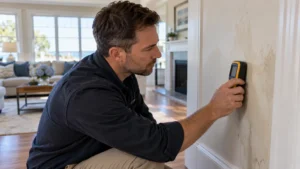
This is why moisture evaluation is such an important part of the process.
You can collect samples from a room, but if water is still entering through a leaking pipe or damp building material remains hidden behind a wall, the underlying problem has not been solved.
What Does Mold Testing Actually Tell You?
Mold testing is the sampling part of an investigation.
Depending on the situation, an assessor may collect:
Air Samples
Air sampling collects airborne particles from selected areas for laboratory analysis.
The results can provide information about what was captured in the air at the time and location of sampling.
Surface Samples
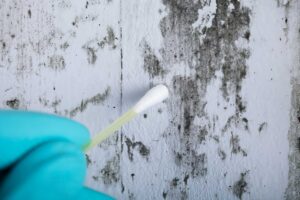
Surface sampling collects material directly from a particular surface or area.
This may be useful when information about material present on a specific surface is needed.
The important point is that testing should have a reason.
It should not simply be added to every inspection because a homeowner is worried about mold.
The New York State Department of Labor specifically advises property owners to ask what type of sampling will be performed, why it is necessary, and what the results are expected to show that is not already known from the assessment.
Do You Need Mold Testing During Every Inspection?
No.
This is one of the biggest misunderstandings around mold inspections.
The New York State Department of Labor states that air sampling and mold testing are not necessary in most cases. It also explains that there are no state or national standards establishing a universally “safe” level of mold against which every sample can simply be compared.
That does not mean testing has no value.
It means testing should answer a specific question.
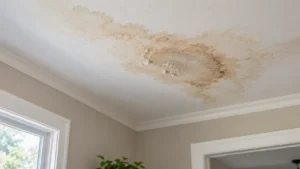
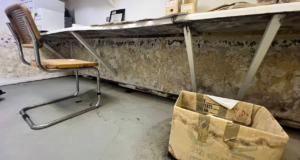
Imagine that a basement has obvious mold growth on drywall next to an active plumbing leak.
Collecting an air sample does not change two facts that are already apparent:
- The building material has a mold problem.
- The moisture source needs to be corrected.
In a situation like that, assessing the extent of affected material and identifying the moisture source may be more useful than automatically starting with air sampling.
When Is the Inspection or Assessment More Important Than Testing?

Several common situations call for understanding the building first.
You Can Already See Suspected Mold
If visible growth is present, the more important questions may be:
- Why did it develop?
- How much material is affected?
- Is moisture still present?
- Does the problem extend beyond what you can see?
- What will need to be addressed during remediation?
Simply identifying a sample does not answer all of those questions.
There Was a Leak or Water-Damage Event
After a plumbing leak, roof problem, appliance overflow, or basement water event, the condition of the affected materials matters.
A wall may appear dry on the surface while moisture remains somewhere that cannot be seen easily.
The investigation therefore needs to consider both the suspected mold and the history of the water problem.
You Smell Something Musty but Cannot Find the Source
A persistent musty odor can justify a closer look, but it does not automatically prove that mold is present.
The first task is often narrowing down possible moisture sources and areas that may have been affected.
If this sounds familiar, see our guide on Musty Smell but No Visible Mold? What Long Island Homeowners Should Check First.
Getting the Right Answer Is More Important Than Ordering Every Test
If you suspect mold in your Long Island home, you do not necessarily need every available test.
You need an investigation that fits the problem.
Visible mold, a musty odor, an old leak, recurring basement moisture, and a post-remediation clearance each present different questions. A professional assessment can help determine whether sampling adds meaningful information or whether the condition of the property already provides a clearer direction.
All Island Mold Inspectors provides licensed mold assessments and mold testing throughout Long Island, including visual assessments, moisture evaluation, air and surface sampling when appropriate, remediation protocols, and post-remediation verification.
The best place to start is not by asking, “Which mold test should I buy?”
Start with:
“What am I trying to find out about this property?”
A qualified assessment can help answer that question before unnecessary testing, cleanup, or repairs begin.